

How P&G Employees Can Avoid Tax Penalties Using the IRS Safe Harbor Rule

October 30, 2025

If you’ve ever found yourself holding your breath when you hit “submit” on your tax return — wondering if you’re about to owe more than expected — you’re not alone. Taxes can be unpredictable, especially when your income changes from year to year.


That’s where the IRS’s Safe Harbor rule comes in. It’s not a loophole — it’s a simple guideline that can save you from penalties.


What is 'safe harbor'?

Safe Harbor says that as long as you’ve paid enough in during the year, you won’t be penalized — even if you still owe taxes when you file.


To stay “safe,” you just need to meet one of these three thresholds:


  • Pay 100% of your prior year’s total tax, or
  • Pay 110% of your prior year’s tax if your income was over $150,000, or
  • Pay 90% of your current year’s actual tax bill.


Hit any of those marks, and you’re off the hook for underpayment penalties — even if your final number ends up higher than expected.


Why it matters

It protects you from penalties

This is the IRS’s way of saying, “As long as you made a reasonable effort, we won’t punish you.”


For clients with equity awards, bonuses, or stock options, it’s a lifesaver. Your income can swing widely from one year to the next, and Safe Harbor keeps you compliant.

It simplifies planning

You don’t have to guess your future income to the penny. Many of my clients — especially P&G retirees — simply base their estimated payments on last year’s taxes. This is particularly useful when your income rises, or you have a big option year, so that you can delay paying the IRS until tax filing.

It gives you flexibility

Once you’ve met your Safe Harbor threshold, you have room to plan strategically. You can realize capital gains, make charitable gifts, or adjust portfolio income without worrying about triggering penalties.


A real-world P&G example

Let’s say a P&G retiree paid $80,000 in total tax for 2024. In 2025, they plan to exercise stock options, and they will also receive a STAR payout, which will bump up their income.


Instead of trying to estimate the perfect amount for 2025, they can satisfy Safe Harbor by paying 110% of last year’s total — $88,000 — spread across the year.


Even if their final 2025 tax ends up being $100,000, they’ve avoided penalties and stress. That’s the beauty of Safe Harbor — it gives you flexibility when income is lumpy or unpredictable.


The takeaway

Safe Harbor is one of those underappreciated tax tools that quietly makes life easier. It’s not about gaming the system — it’s about removing uncertainty and protecting yourself from surprises.


For anyone with variable income — P&G executives, retirees, or professionals with bonuses and equity — this is one rule worth knowing and planning around.

Recent Insights

August 28, 2026
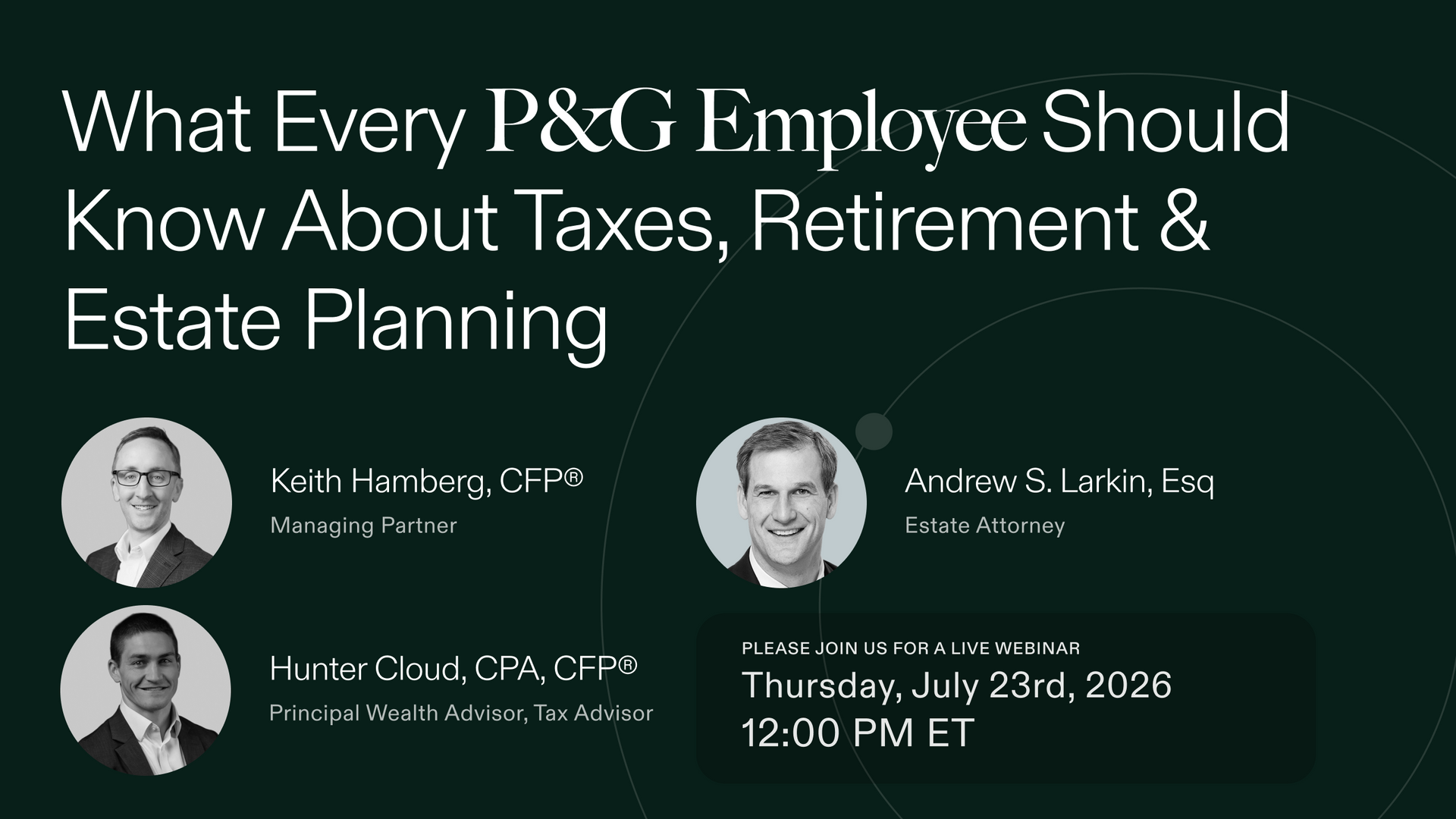
In this webinar for P&G employees & retirees, Keith Hamberg, CFP® is joined by Hunter Cloud, CFP®, CPA and ARAG estate planning attorney, Andrew Larkin.

Guide on choosing between P&G stock options and RSUs for long-term incentive awards
August 3, 2026
Should you choose stock options or RSUs for your P&G LTIP award? Discover a strategic decision framework to align your equity compensation with your wealth goals.

Black title slide reading “Beyond the Bounty” on dark green, with P&G and Beyond Wealth Partnership logos.
July 15, 2026
Explore key questions every Procter & Gamble employee should ask on PST Contribution Day to optimize their retirement portfolio and asset allocation.